Model focus: North American Model 3 · Updated September 28, 2026 with owner photographs
Choose four matching tires that meet the specifications for your exact car, then update the tire configuration and verify cold pressure after installation.
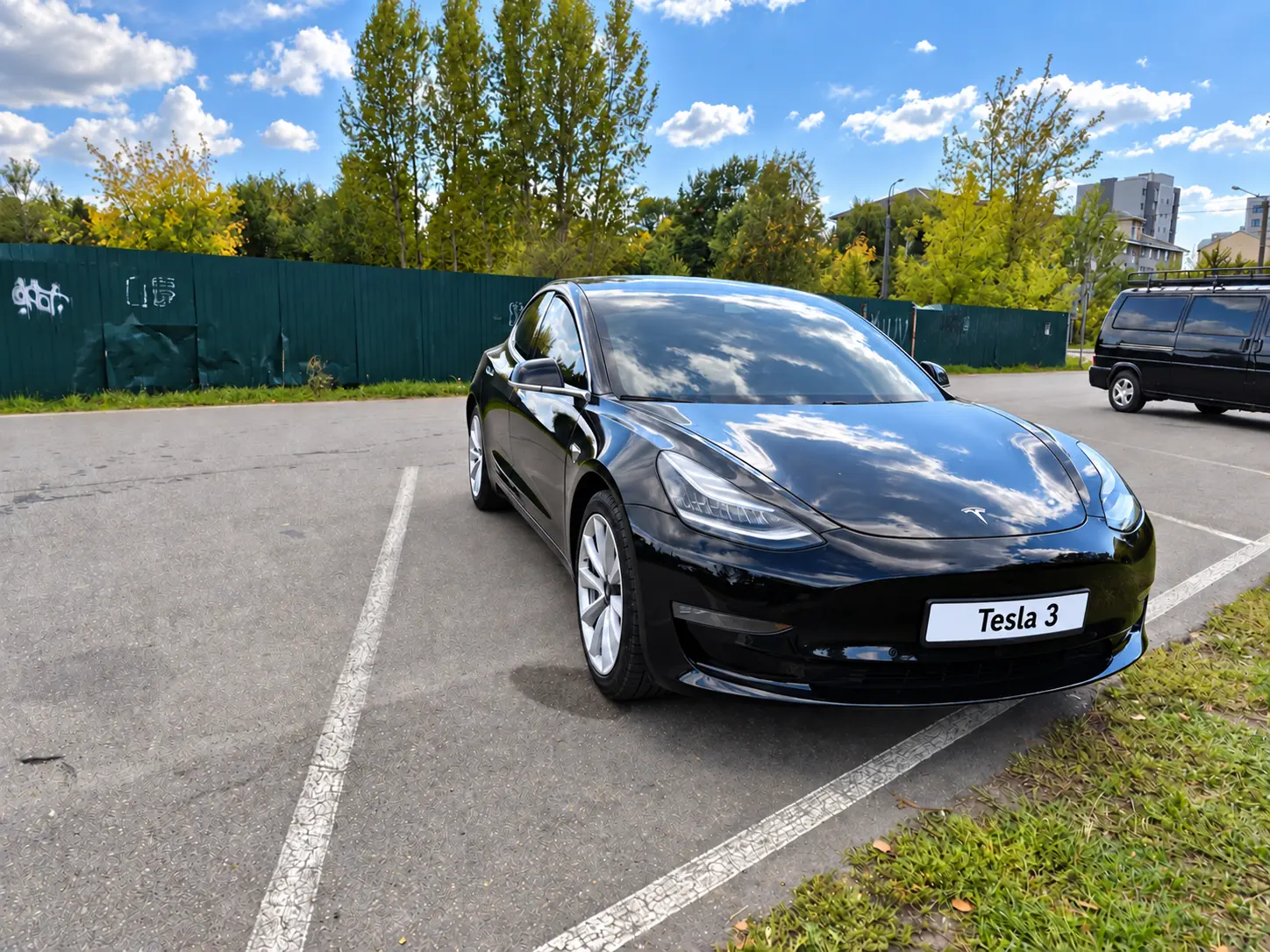
Our 2019 US-market Model 3. The photographs below document the project car; they are not a fitment recommendation for every Model 3.
When winter tires make sense
Tesla recommends winter tires when driving in cold temperatures or where snow or ice may be present. Performance summer tires have reduced traction below 40°F (5°C) and are not recommended for snow or ice.
Look for the mountain/snowflake symbol. It identifies a winter tire. An M+S marking alone can appear on all-season tires and does not mean the tire offers the same winter traction.
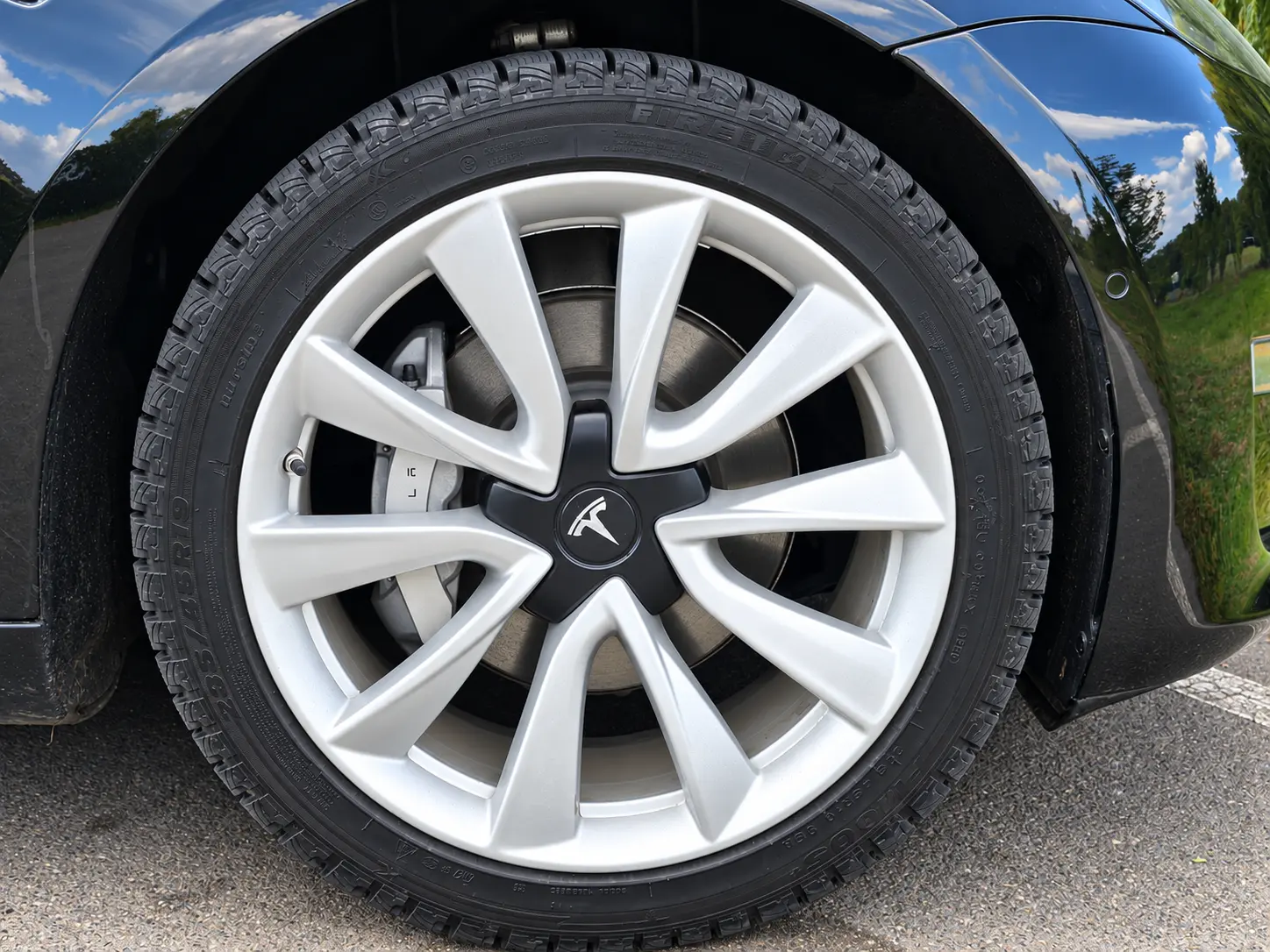
A close view helps reveal tread, sidewall condition, wheel damage, and markings before installation.
Selection checklist
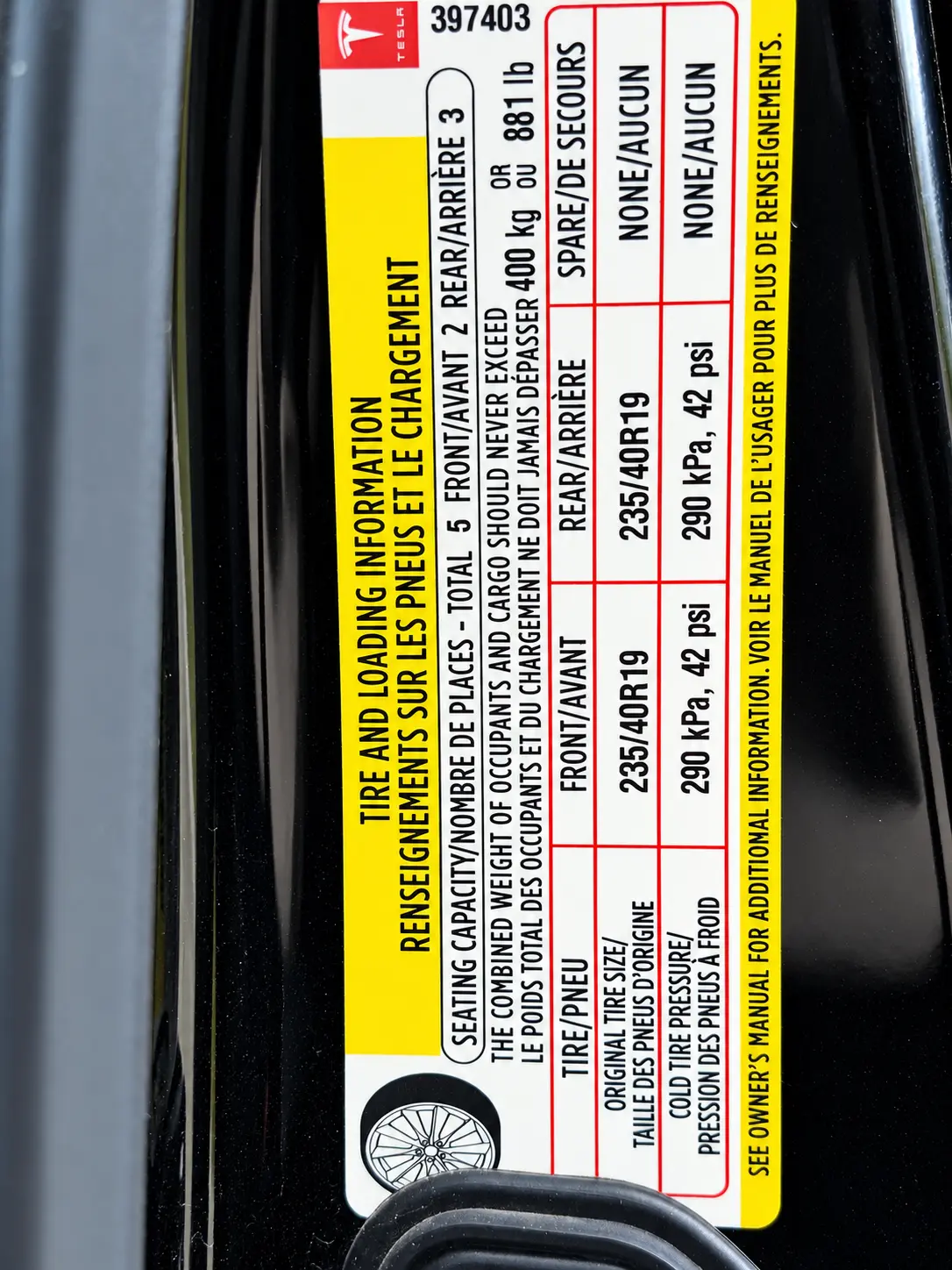
Confirm the original tire size on the driver-door label and in the car's specifications.
Match or exceed the original load and speed ratings.
Install a complete matching set: same diameter, brand, construction and tread pattern on all four wheels.
Confirm wheel fitment, offset and TPMS compatibility before ordering.
Use a qualified installer familiar with EV weight and Tesla lift points.
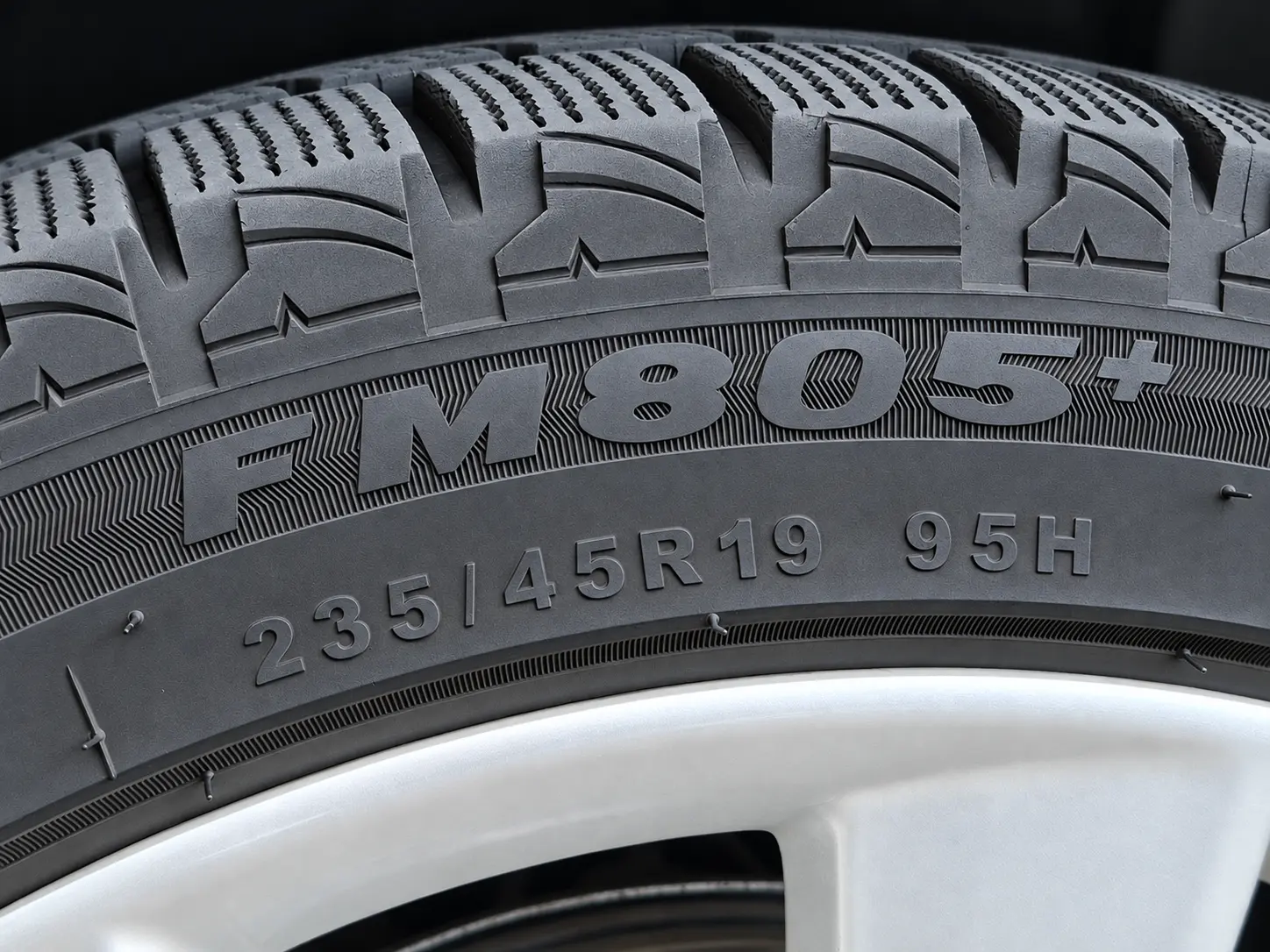
The project car currently wears a tire marked 235/45R19 95H. Its door label specifies 235/40R19, so this photograph illustrates where to read the size—not a universal recommendation. Confirm the correct size for your exact vehicle.
After installation
Set all four tires to the cold pressure shown on the Tire and Loading Information label.
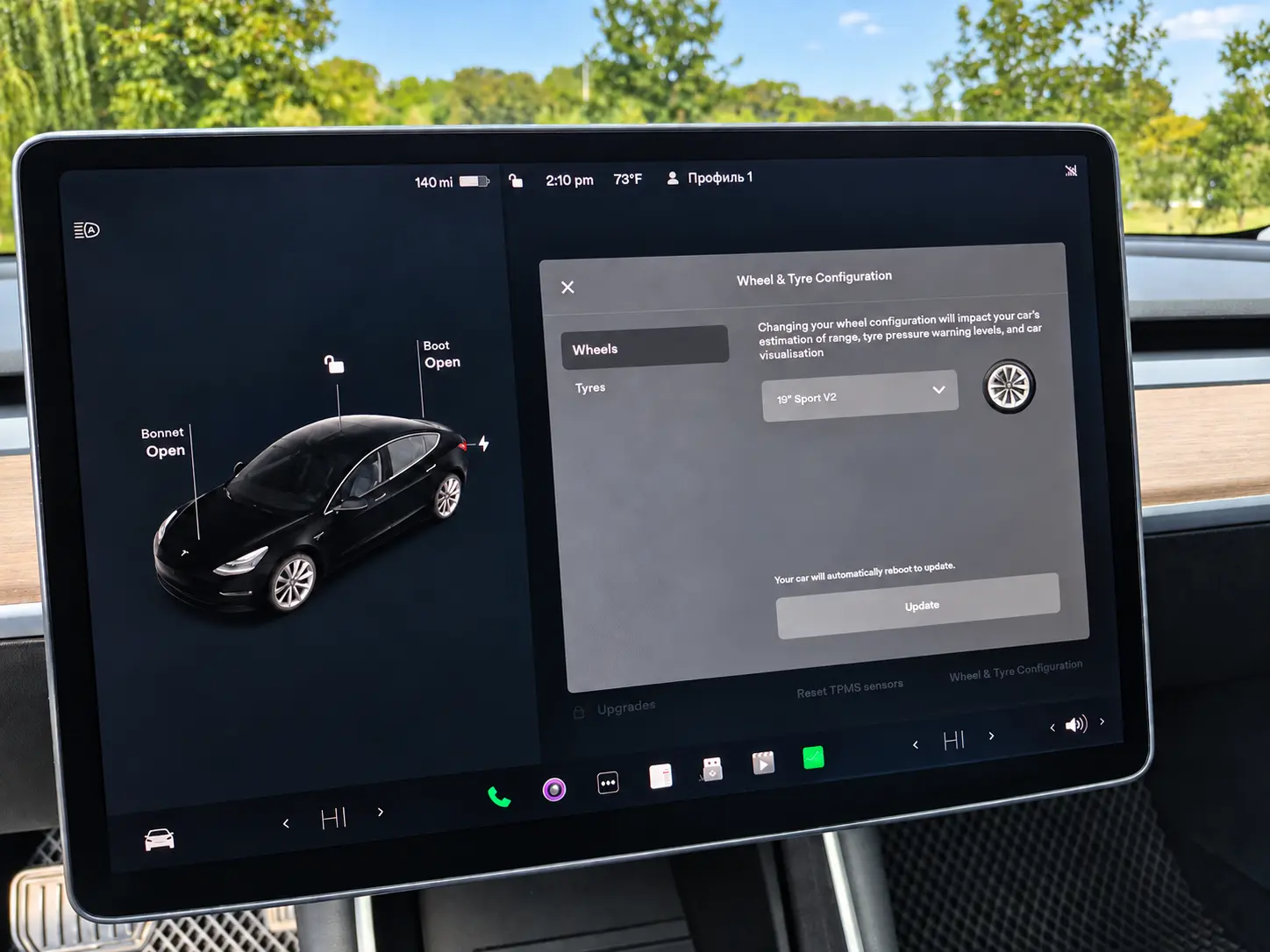
On the touchscreen, open Controls → Service → Wheel & Tire → Tires and select the appropriate tire configuration.
Drive gently while the vehicle recalibrates. Aggressive winter compounds can temporarily reduce regenerative braking.
Recheck cold pressure and lug-nut torque according to the installer's instructions.
Inspect tread, sidewalls and pressure regularly through the season.
The Wheel & Tyre Configuration screen on our 2019 Model 3. Available names and menus can vary by software and vehicle configuration.
Tread depth and cold pressure
Tesla says tires below 5/32 in. (4 mm) do not perform well in snow and slush. Cold weather also reduces pressure by approximately 1 PSI for every 10°F (6°C) drop in ambient temperature. Use the door-pillar label—not the maximum pressure molded into the tire—as your target.
Our door-pillar label lists 235/40R19 tires and 42 psi (290 kPa) cold pressure front and rear. Always follow the label fitted to your own car.
Snow chains
Use only chains approved for your wheel and tire size and install them on the rear tires only. Remove wheel covers first, drive slowly, and remove the chains when conditions permit. Chain requirements and restrictions vary by jurisdiction, so check local rules before travel.
Fitment changes by configuration. Do not assume that a chain, wheel or tire recommended for another Model 3 trim or model year will clear your brakes and suspension.